
Reference
On this page:
The vision for Darling
The following vision for Darling train and tram zone activity centre is built from the Statement of Advice prepared by a Community Reference Group (CRG) made up of local residents.
Darling will continue to grow as an accessible, leafy centre with a strong residential character. Its key junction provides an opportunity to support more homes, jobs and local services, creating a welcoming place with more activity and community life.
I support an increase in housing density if given sufficient thought and planning. It is important for me to see the character and parkland of the area preserved or even enhanced.
What we understand about place and how we’ve addressed it
Community members value the residential character, mature gardens and other natural features that contribute to the neighbourhood’s charm.
The CRG recognises Darling as an area with a limited commercial area, defined by the strong landscape presence particularly around the residential streets.
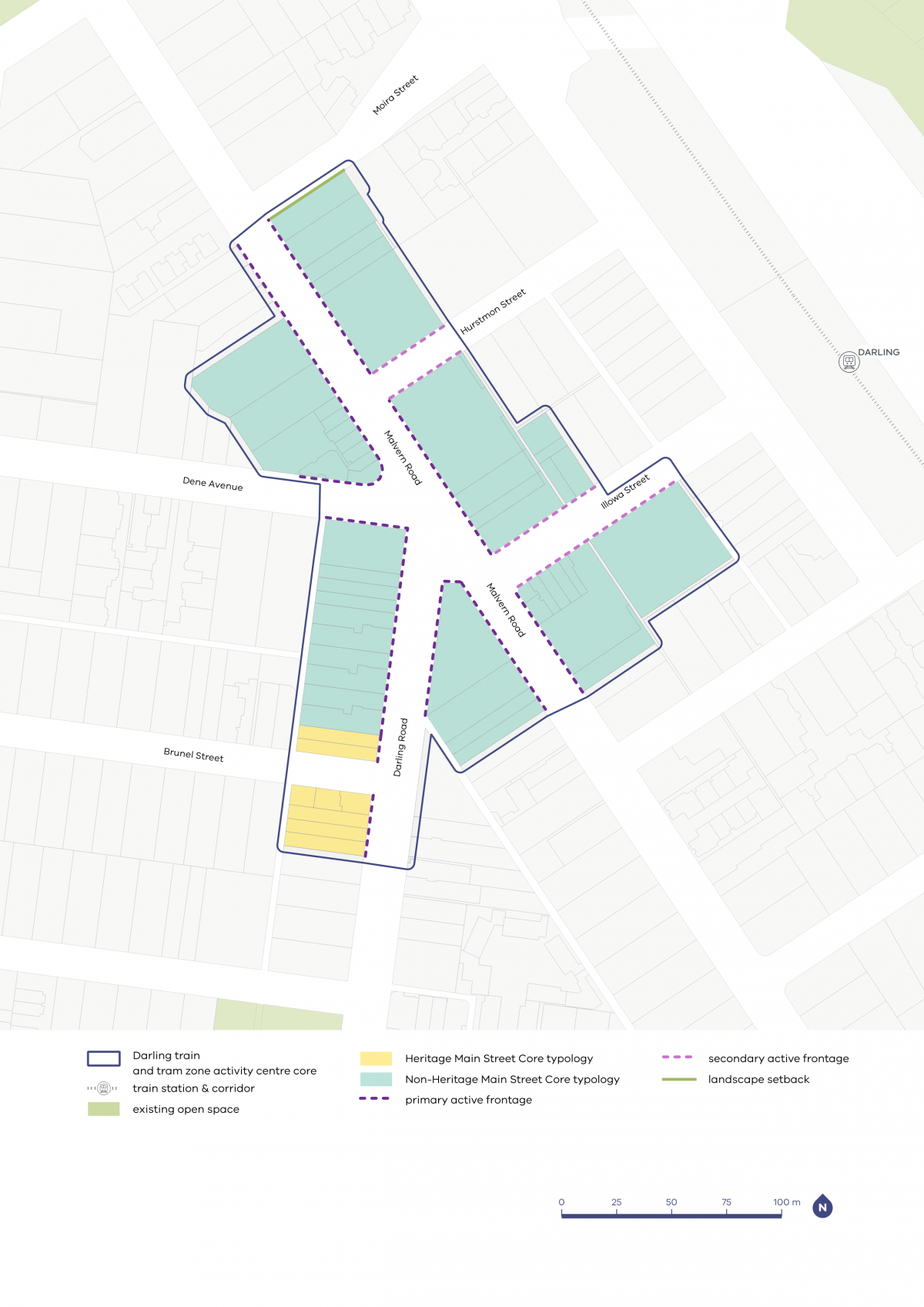
That’s why we have applied Non‑Heritage Main Street Core typology to provide adequate setbacks along Malvern Road.
We have applied Heritage Main Street Core typology to some sections of Darling Road to preserve the heritage character.
We heard that the community is generally supportive of increased density close to public transport and along commercial corridors such as Malvern Road.
Tooronga to Holmesglen core and catchment map
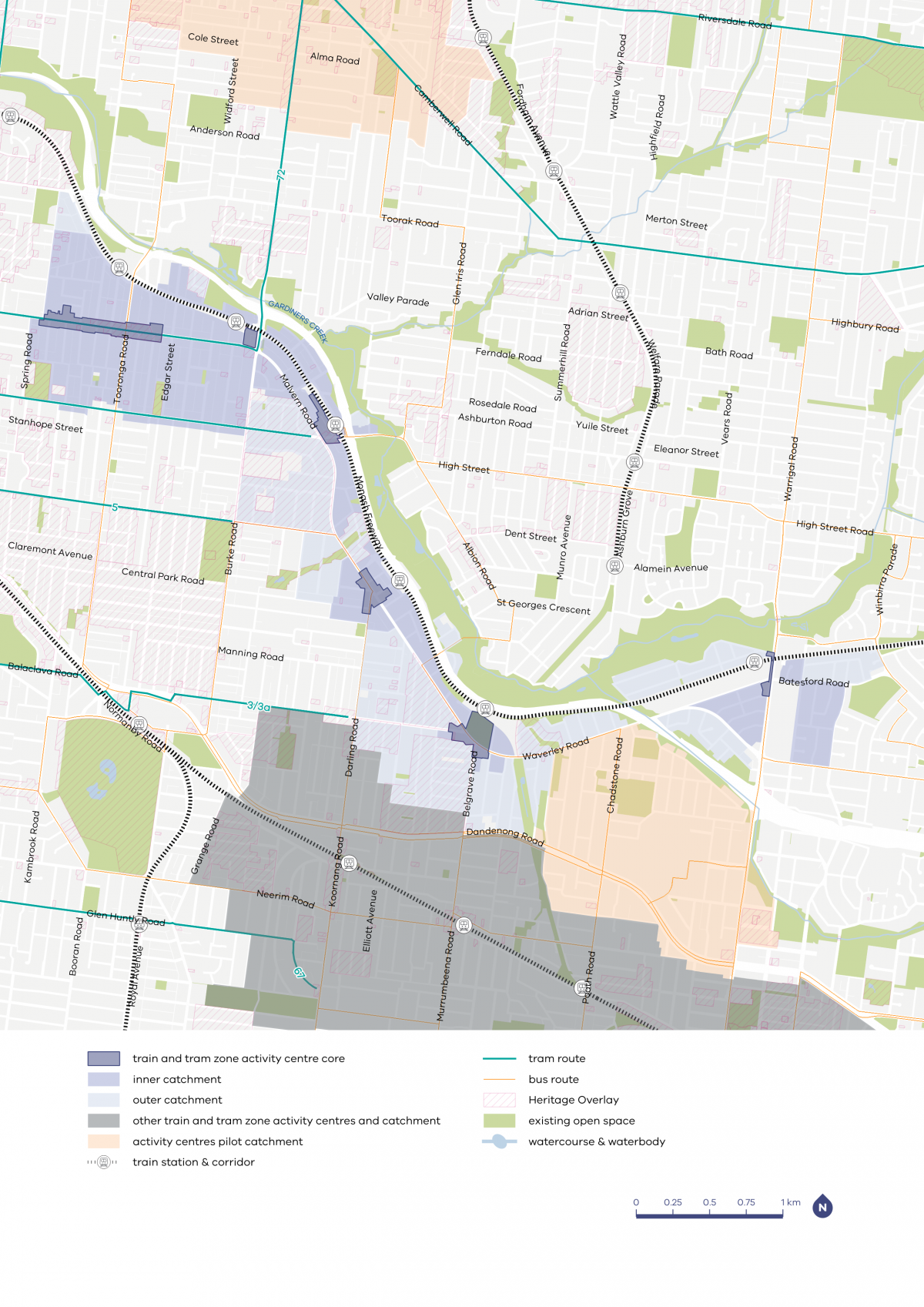
Darling core and catchment explained
The outer catchment instead of inner catchment is applied in response to its scale and size as a ‘neighbourhood activity centre’ in Plan for Victoria.
The core is the central part of the train and tram zone activity centre, closest to public transport, jobs and services. This area is best suited to accommodate more homes.
The catchment is the surrounding area within approximately 10 minutes’ walk of the core (around 800 metres).
As you move away from the commercial and community core of the train and tram zone activity centre, we expect that the building heights will gradually decrease. This will allow a transition between the activity centre and the surrounding suburb.
In Darling, the inner catchment responds to services along Malvern Road and Darling Road.
The outer catchment is limited extending to the east and west.
What we are doing for your community
As part of our work, we've:
- applied active frontages along Malvern Road and Darling Road to support vibrant commercial activity
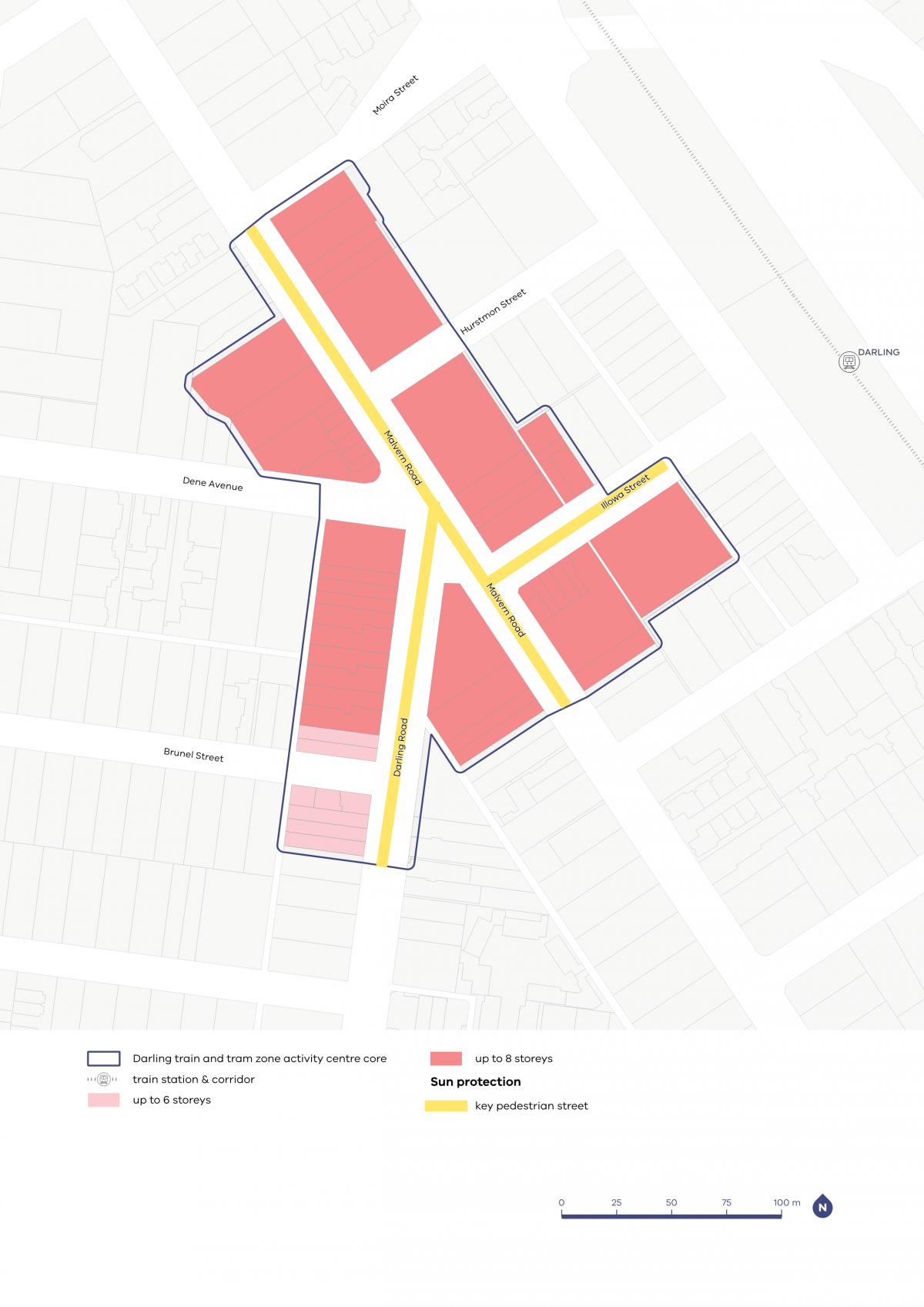
- applied higher sun protection to Darling Road, Malvern Road and Illowa Street are key pedestrian streets
- specified heights of six to eight storeys in the Darling activity centre.
Refer to the following plans:
- Plan 9: Darling typology, activation and setbacks
- Plan 10: Darling building heights and sun protection
Plans
The built form outcomes and building heights for the activity centre core are set out on the following plans:
Page last updated: 14/10/26