Victoria is the fastest growing state in Australia and is expected to support 11.2 million people by 2056. 9 million of those people will live in Melbourne.
Plan for Victoria sets a long-term vision for managing Victoria's growth while creating more liveable, sustainable and resilient communities. A key part of achieving this vision is ensuring that population and housing growth is supported by high-quality green infrastructure, including parks, open spaces, urban forests and green streets.
Cooling and greening Melbourne is a priority for Plan for Victoria, recognising the important role green infrastructure plays in responding to climate change, reducing urban heat, supporting biodiversity and improving the health and wellbeing of communities.
As Victoria grows, we need to plan for green infrastructure with the same importance as grey infrastructure, ensuring it is integrated into land use, housing and infrastructure planning to:
- enhance urban amenity, liveability and quality of life
- improve landscape connectivity and biodiversity
- reduce urban heat and build resilience to climate change
- support healthy, active and connected communities
- ensure growing communities have equitable access to quality green spaces.
This can be achieved by:
- protecting and enhancing existing green spaces, vegetation and tree canopy
- creating new opportunities for urban greening, particularly in areas experiencing significant housing and population growth
- improving water-sensitive urban design to support healthier and more resilient landscapes
- greening buildings through green roofs, facades and walls
- increasing permeable surfaces to reduce stormwater runoff and urban heat
- integrating green infrastructure into the planning and delivery of new housing, activity centres and transport corridors.
Cooling and greening Victoria will help ensure that as the state grows, its suburbs and towns become greener, healthier and better equipped to respond to a changing climate.
Green infrastructure
Green infrastructure describes the green spaces, trees, soils and water systems that intersperse, connect and provide vital life support for all of us and the other various fauna species within our urban environments.
Victoria's network of green spaces includes a range of public and private green infrastructure assets, including:
- parks and reserves
- backyards and gardens
- green roofs and walls
- rain gardens
- waterway and transport corridors that provide important green linkages.
Importance of green infrastructure
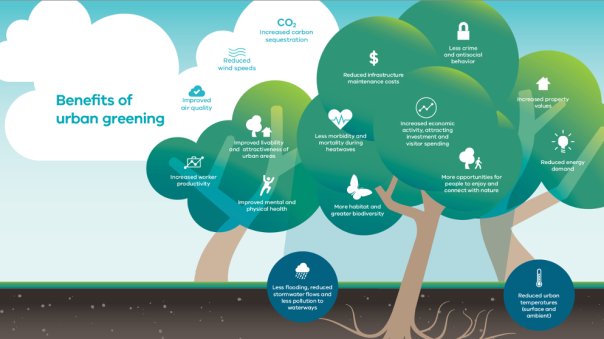
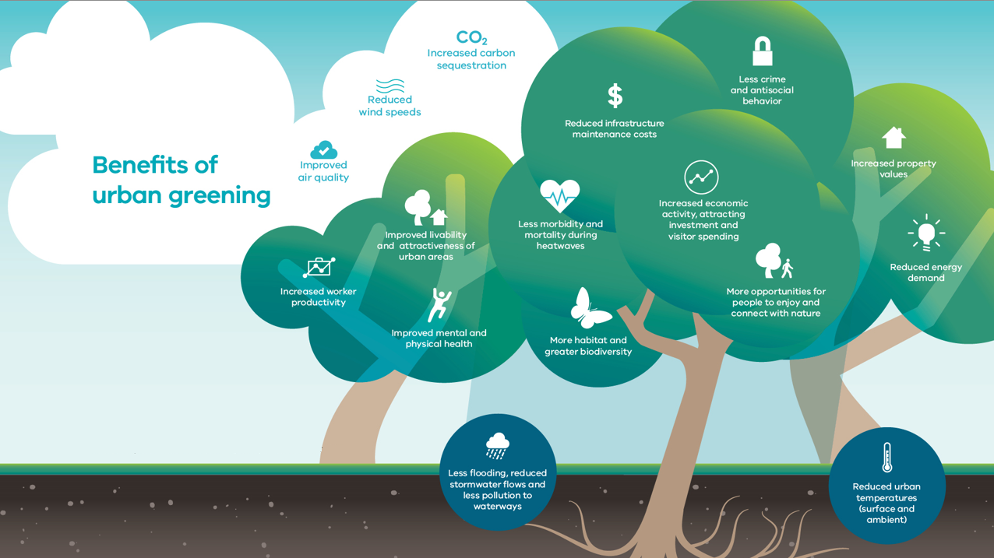
Green infrastructure is essential for community health and wellbeing and for maintaining the natural ecosystems on which we depend. It reduces the impacts of climate events such as flooding and heatwaves, and underpins our economy in areas such as health, liveability and industry.
In dense urban environments, the urban heat island effect can cause urban areas to be up to 4 °C hotter than surrounding non-urban areas. The built environment can absorb, trap and in some cases, directly emit heat due to the prevalence of heat absorbing materials such as:
- dark coloured pavements
- roofs
- concrete
- urban canyons trapping hot air
- lack of shade and green space.
Green infrastructure reduces urban heat through both shading and evapotranspiration. Temperature decreases of even 1-2 °C can have a significant impact on reduced heat related morbidity and mortality.
Greening the city can also help protect waterways and reduce flooding through improved stormwater management, improve air quality, and reduce energy costs.
Green infrastructure supports biodiversity and enhances liveability and community wellbeing by connecting people to nature, which is fundamental to the physical and mental health of every Victorian.